intro - pear, cashmere, cypress
Grassroots and liberatory organizations
like ours usually don’t last long.
We’re almost always underfunded,
under-resourced and overstretched—
trying to care for the communities we serve...
while also tending to the people
doing the labor of that care.

The work of tending
to community and
building programming
in this way is relentless.
And it’s relentless
inside structures
that are antagonistic
to the work itself.
Structures built to starve
grassroots, liberatory,
and Black-led work
of the resources it deserves.
One of the biggest hurdles we face in holding all of this is ensuring that we have enough money to do what we need to do.
If we had more resources,
more infrastructure,
more stability...
we could do even more
world-building,
life-changing,
extraordinary work.
But the truth is,
our work is often tamed.
Not by our vision,
but by our lack of resources.
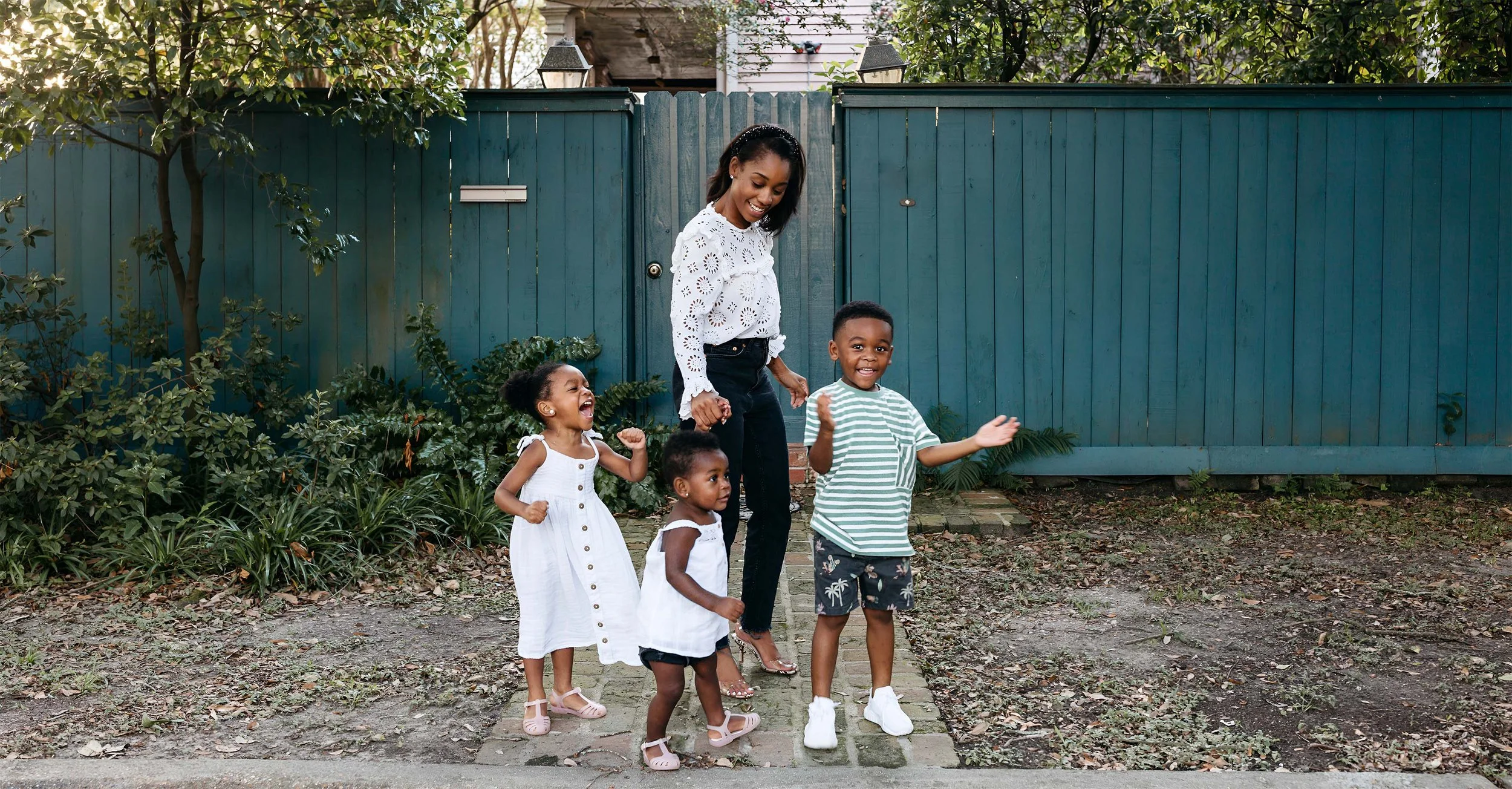
At Loving Black Single Mothers, we are a grassroots organization, founded and led by a Black single mother, in service to the flourishing of Black single mothers and their families.

We are committed to
work that refuses exploitation
and extraction.
Work that centers dignity,
rest, and joy.
And yet, in a system that rewards hierarchy and hoarding, doing values‑aligned, liberatory work means we must constantly find creative ways to stay resourced.

The Resource Mobilization Circle is one of those creative ways.
It’s a living experiment in how we sustain liberatory work in a system built to starve it.
What the
Resource
Mobilization
Circle Is
This is not a fundraising campaign.
It’s a political practice.
The Resource Mobilization Circle is a 3.5‑month journey for white people who are ready to move from understanding inequality to mobilizing resources in the direction of justice.
In this circle, you’ll deepen your political clarity, develop the courage and skill to ask for money
inside your own networks, and actively redistribute funds to support Black single mothers through Loving Black Single Mothers.

Why We Call It Mobilization, Not Fundraising
Fundraising and mobilizing may look similar from the outside, but they live in entirely different lineages.
Fundraising centers charity…
and measures success
in dollars raised.
Mobilizing centers solidarity…
and measures success by
what’s been moved.
Money, yes—
but also awareness,
courage, and
connection.
To fundraise is
to collect.
ideal: sync scroll + images
To mobilize is
to transform.
ideal: sync scroll + images

Mobilizing asks more
of you.
Not just your money,
but your body,
your voice,
your networks,
and your courage.
That’s why we call this a Resource Mobilization Circle, not a fundraising circle.

Because mobilization sits in a different lineage.
A lineage rooted in organizing, in solidarity, in somatic awareness, and in the recognition that moving money is both a political and embodied act.
It’s
political
To Ask
Unlearning is only the beginning.
Many white people have spent years reading, learning, and reckoning with history—understanding how this nation, its wealth, and its systems were built.
That work is essential.
But when awareness lives
only inside you…
it risks becoming
another form of possession.
The Resource Mobilization Circle
moves that
awareness into motion.
It’s one thing to reach into
your own pocket—
to give from what you personally
have unlearned your way into.
It’s another to reach into
your networks.
To tap the vast pools of wealth, inheritance,
and access that whiteness connects you to.
That act of asking,
of initiating the redistribution of resources that were never meant to circulate this way,
is profoundly political.
To ask is to disrupt.
To ask is to expose
the myth of scarcity.
To ask is to practice
collective repair.
This circle
trains that muscle.

Guiding participants to move money through their networks, not just from themselves, and to understand redistribution as both a practice and a politic.
Why We Call It Mobilization, Not Fundraising
We call this healing work because redistribution is one of the few practices that allows us to materially interrupt the story that whiteness has written on everyone’s bodies.
The story of separation, scarcity, entitlement, guilt and distance from one another’s humanity.
For many white people,
unlearning racism has lived
primarily in the mind:
reading, discussing, knowing.
But healing rarely happens through knowledge alone.
Healing requires
movement—
the movement of resources,
the movement of fear,
the movement of the nervous system
as it encounters discomfort
and chooses alignment anyway.

Asking for money,
giving money,
and mobilizing money
are somatic acts.
They surface everything
you’ve been taught to hide:
fear of rejection, fear of judgment,
fear of breaking social contracts,
fear of naming your privilege,
fear of being seen.
This is where the healing potential lives.
Because when you learn to move
through those fears,
something reshapes inside you.·
ideal: sync scroll - alt: horizontal scroll
Money
becomes less sacred.
ideal: sync scroll - alt: horizontal scroll
Relationships
becomes more honest.
ideal: sync scroll - alt: horizontal scroll
Your values
become more embodied.
ideal: sync scroll - alt: horizontal scroll
And your nervous system
learns that
discomfort is not danger…
ideal: sync scroll - alt: horizontal scroll
it’s
transformation.
ideal: sync scroll - alt: horizontal scroll
This work is healing because it invites you, gently but firmly, to confront the gap between what you believe and what you practice.
And then it gives you the tools and community to close that gap with intention rather than shame.

It is healing because
it loosens the grip
that whiteness has on
your body.
The grip that says
“don’t talk about money,”
“don’t disturb the peace,”
“don’t reveal the truth,”
“don’t offend,” “don’t ask.”
These rules don’t just uphold inequality;
they constrict your humanity, too.
It is healing because
it contributes to repair.
Actual repair.
Not metaphorical repair.
Material repair.
This is not self-healing
that lives in isolation.
ideal: sync scroll with images
This is healing as
participation.
ideal: sync scroll with images
Healing as
alignment.
ideal: sync scroll with images
Healing as
reorientation
toward collective life.
ideal: sync scroll with images
When we say this is healing work, we mean that something in this practice liberates you from the distortions that whiteness has shaped you through, distortions that harm you and harm others.
And it frees resources
to move where
they were always needed.
The
Journey
Over three and a half months, we’ll move together through a rhythm of learning, reflection, and mobilization.
Our gatherings happen biweekly on Fridays for 2.5 hours each, beginning in March 2026, with prework before each session.
Introduction
Opening
The Circle
Opening Session
Friday, March 13th
Grounding
Our Journey
In this 90-minute gathering, you’ll connect with your fellow Resource Mobilization Circle members, meet the LBSM team, and deepen your understanding of our organization and its mission. We’ll review the timeline and goals for our work together, and create space for questions and discussion. This session is designed to ground us in our shared purpose, provide clarity about the important work ahead, and foster a sense of community with the people who will be walking this journey alongside you.
Part One:
Political
Education
Session 1
Friday, March 27th
The Inequality
of It All
We’ll take a deep dive into the history and present reality of inequality. How racial capitalism, policy, and generational advantage created the current wealth landscape, and why white people hold disproportionate access to resources.
Session 2
Friday, April 10th
The Nonprofit
and Charitable
Industrial Complex
Together, we’ll examine how traditional philanthropy and nonprofit structures often uphold the very systems they aim to disrupt.
We’ll talk about the distinction between solidarity and charity, explore the emotional terrain of giving, and begin to locate this work inside the lineage of organizing rather than fundraising.
Session 3
Friday, April 24th
Beyond Stereotypes:
The Politics and
Possibility of
Black Single Motherhood
We’ll shift focus to the truths and brilliance of Black single motherhood. How state policy, media narratives, and cultural myths have shaped public perception, and how LBSM’s work intervenes in that story.
Part Two:
Preparing
to Mobilize
Session 4
Friday, May 8th
The Politics of Asking and Transforming Discomfort into Action
We’ll explore the fears and discomfort that often arise when thinking about asking for money.
Together, we’ll unpack our personal money stories and reflect on how these narratives shape our perspectives on giving and asking others to give.
We’ll reframe asking for money as a powerful political act, one that aligns with your values and advances the mission of Loving Black Single Mothers.
Session 5
Friday, May 22nd
Your Why
You’ll craft your personal “why statement” — a grounding articulation of your passion and purpose when inviting others to donate.
This session connects your personal values to the collective work of redistribution.
Session 6
Friday, June 5th
Mapping Your
Resource Garden
You’re connected to far more resources than you realize. We’ll map your “resource garden”—identifying the people in your life to reach out to, determining how to approach them, and planning how much to ask from each person.
Part Three:
Action
to Days
Saturday, June 6th –
Thursday, June 25th
20 Days
of Action
With a goal of collectively mobilizing $15,000 — or roughly $1,000 per participant — you’ll reach out to your network, follow up with potential donors, have 1:1 conversations, send thank-you messages, and amplify your efforts on social media.
Session 7
Friday, June 12th
Midpoint
Check-in to
Reflect and Refocus
We’ll gather to celebrate progress, share what’s working, troubleshoot challenges, and support one another in refining our approaches as we head into the final stretch of mobilization.
Session 8
Friday, June 26th
Closing
Gathering
We’ll come together to celebrate the journey we’ve shared and reflect on the impact we’ve made.
We’ll honor what worked, name what was hard, and explore how to carry this practice forward.
The Cost to
participate
You won’t pay a traditional fee to participate in this circle. You will be asked to make a meaningful personal donation as part of stepping into this practice.
This isn’t tuition,
and it isn’t a transaction. It’s an act of alignment, a way of grounding yourself in the very practice you’ll be inviting others into.
It helps you experience the clarity, courage, and conviction you’ll later ask your networks to embody.
What “meaningful” looks like will differ from person to person, and we’ll provide some guidance on how to come to your own amount.
For those who are already recurring donors or currently supporting LBSM, your existing giving counts toward this commitment; you are already participating in the practice.
For those new to our work, we’ll invite you to make a meaningful donation as part of joining the circle, in addition to the resources you’ll mobilize from your networks.
Participants don’t buy access. They earn it through action—
by doing the work of reaching into their networks, initiating uncomfortable conversations, and moving money toward Black single mothers.
This circle is capped
at 15 participants.
Each participant is invited to help collectively mobilize $15,000 — roughly $1,000 per person — toward the work of Loving Black Single Mothers.
This structure models a different economy—
one where learning and redistribution are inseparable, where education produces repair, and where the cost of admission is your willingness to move something real.
Why
We Do This
in Circle
We don’t do this work alone because this work is not meant to be done alone.
Mobilizing resources, confronting the violence of whiteness, and challenging the status quo that has shaped your money stories, your relationships, and your sense of safety —
none of that can
be held in isolation.
Whiteness
teaches separation.
It teaches privacy around money,
silence around harm,
and avoidance around discomfort.
It teaches you to
face things individually.
to “figure it out yourself,”
to never admit uncertainty or fear.
A Circle
ideal: fancy color transition
interrupts that.
ideal: background color from preceeding page transforms to pear circle with dark text
We gather in community
because collective practice makes it possible to:
stay present through discomfort instead of shutting down
unlearn patterns of avoidance and isolation
witness others doing this work and feel less alone
be held accountable with care, not shame
build the courage that only emerges in connection
understand that redistribution is relational, not private
Circles make transformation
more possible.
Circles create safety
where there would
otherwise be withdrawal.
Circles remind you
that this is
not self-improvement.
It’s
collective practice
toward repair.
We do this in community because community is where both the harm and the healing live.
You learn to move money differently
when you are witnessed.
You learn to ask differently
when you are supported.
You learn to show up differently
when you are not doing it alone.
This work is challenging — emotionally, politically, and somatically.
And that’s exactly why the circle exists: to hold you, to steady you, and to help you practice what you’ve been taught to avoid.
This Is
For you If…
You’re white and ready to connect your anti-racist learning to material action.
You’re ready to move from understanding to mobilizing.
You’ve started to notice how whiteness shapes access…in your life, your family, your workplace, your social world and you’re ready to understand what that means for your relationship to money.
You might not think of yourself as wealthy, but you recognize that you’re connected to wealth through your networks, your education, your family, your workplace, or the social trust that whiteness affords. You may not have extra money sitting in a savings account, but you know people who do. You may not have inherited wealth, but you’ve likely inherited access.
You feel the tension of wanting to live your values inside systems that reward hoarding and hierarchy, and you want to practice another way.
You’re ready to replace guilt and hesitation with clarity, courage, and movement.
You believe that redistribution is not a one-time act of generosity, but an ongoing political and relational practice.
Together,
We Move
In this circle, you’ll learn to
understand money as energy,
networks as pathways,
and redistribution as devotion.
ideal: redesign for horizontal scroll w images
We’re not fundraising for a cause —
we’re organizing for repair.
ideal: redesign for horizontal scroll w images
Join us as we build
a practice of moving money,
moving fear,
and moving toward justice.
ideal: redesign for horizontal scroll w images
Who’s
Holding
The Circle
The Resource Mobilization Circle is facilitated and tended to by Toi Smith, founder and executive director of Loving Black Single Mothers.
Through Loving Black Single Mothers, she’s built liberatory programs like Holiday Love and Forever Flourishing that put money directly into the hands of Black single mothers…
...while inviting those with
access to wealth into deeper,
values-aligned practice.
This circle extends that lineage, a space where learning, embodiment, and redistribution meet.
The space is also tended to and supported by Director of Operations, Renee Barreto.
FAQ
-
This circle is for white people who want to move their anti-racist learning into material action. You don’t have to identify as wealthy to participate. What matters is your willingness to mobilize within the networks and access that whiteness connects you to.
-
No. This isn’t about your personal wealth; it’s about your proximity to wealth. Most white people, even those without large incomes, are connected to networks where wealth circulates—family, work, school, or social circles. This circle helps you learn how to move those resources toward justice.
-
A meaningful donation is an amount that feels significant to you without being destabilizing. For some people, that may be $100; for others, it may be $500 or more. If you already give to LBSM, your current giving counts. If you’re new, we’ll invite you to choose an amount that feels honest and aligned wih your capacity. We’ll also offer tools and resources to help you make this decision.
-
The circle meets biweekly for 2.5 hours from March through June 2026. There is brief prework before each session, and a 20-day activation period in June where you’ll be in active conversation with your networks.
-
That’s expected and part of the work. This circle helps you unpack where that discomfort comes from and supports you in transforming it into grounded, values-aligned action. Asking is not just logistical—it’s political and relational. You’ll receive templates, scripts, and practice time to help build confidence.
-
The Resource Mobilization Circle is facilitated and tended to by Toi Smith, founder and executive director of Loving Black Single Mothers, a Black woman-led grassroots organization dedicated to the flourishing of Black single mothers and their families.
-
All funds mobilized through the circle directly support the ongoing work of Loving Black Single Mothers—including direct cash redistribution to mothers, emergency assistance, and sustaining infrastructure that allows us to keep this work alive.
-
This isn’t a training, it’s a practice. You won’t just learn about power, race, and money; you’ll move money. You won’t just read about solidarity; you’ll live it. This is about shifting from awareness to embodied, relational action.
-
Not routinely, but we will accommodate the one off recording of sessions when needed. These gatherings are designed to be live, relational, and grounded in trust. We create spaces where participants can bring their full, unfiltered selves — and that kind of vulnerability isn’t something that can be honored or experienced through recordings. Your presence matters.
-
Yes. Most people who join have never mobilized money or asked their networks to give before — and that’s the point. This isn’t a traditional fundraising training; it’s a practice space for learning how to move resources through your networks in alignment with your values. You’ll be guided every step of the way, with tools, templates, and space to practice asking in a way that feels grounded and real. You don’t need prior experience — just a willingness to show up, learn, and move something meaningful.